
Decreased Cooling Could Mean A Faulty Refrigerant Control Valve
Decreased Cooling In GM And VW Cars And Trucks Could Mean A
Faulty Refrigerant Control Valve, Not A Failed Compressor.
Your customer comes in complaining that their cars A/C loses cooling at idle or that they have to rev up the engine to get it to cool. You throw on the gauges and find that the suction is up or discharge won't move; obviously, the compressor needs to be replaced. But does it? In many cases, with a fixed-stroke type compressor, that may be true. However, if the car or truck uses a variable-stroke compressor, there might be another reason for the decreased performance.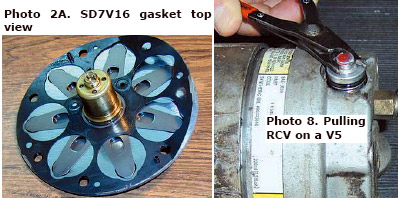
Instead of a failed compressor, the cooling loss is due to a faulty Refrigerant
Control Valve (RCV). The symptoms are suction pressures above normal, anywhere from 45-80 psi, while the discharge pressure remains somewhat normal. Air from the vent is merely "fresh" or even somewhat warm.
Written by Ignacio Corella. Published by Cool Profit$ Magazine.
 See attachment area below for complete .PDF file of this article.